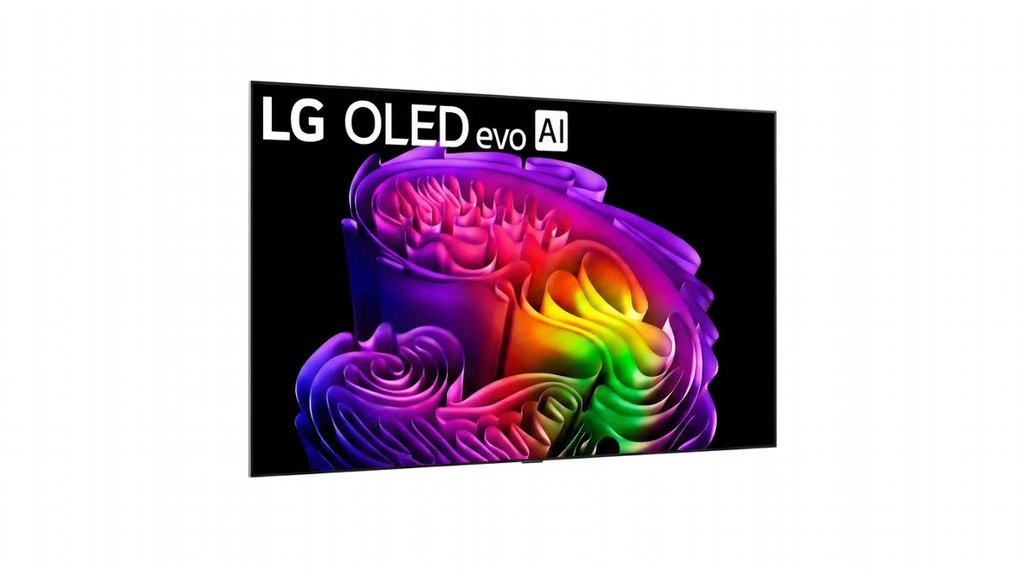
OLED TVs make their own light at every pixel, so they deliver perfect blacks, very wide viewing angles and the fastest motion. QLED TVs are LCD TVs with a quantum dot layer and an LED backlight, so they get brighter, cost less in big sizes and carry no burn-in risk. Pick OLED for a dim room, movies and gaming. Pick QLED, especially a Mini LED model, for a bright room or a screen larger than 77 inches.
The names sound alike, but the two technologies are very different under the glass. Below, we explain how each one works, compare them point by point, and cover the 2026 models from LG and Samsung so you can choose with confidence.
What Is QLED?
QLED stands for quantum dot LED. In Samsung's words, "QLED technology uses an LED backlight that projects onto a quantum dot layer." The quantum dots convert the backlight into very pure colors, which is why QLED TVs can show bright, saturated images. Underneath, a QLED is still an LCD TV: liquid crystals open and close to let backlight through, and the backlight itself is always on behind the panel.
The type of backlight makes a huge difference in picture quality:
- Edge-lit or basic direct-lit: found on budget QLEDs. Fewer zones mean grayer blacks.
- Full-array local dimming: the backlight is split into zones that dim independently, which improves contrast.
- Mini LED: thousands of tiny LEDs in many more dimming zones. Samsung calls its Mini LED TVs Neo QLED; Samsung says its "Neo QLEDs use Mini LEDs for backlighting." LG sells its quantum dot Mini LED models as QNED.
- RGB Mini LED or Micro RGB: the newest step, with red, green and blue backlight LEDs. Samsung's 2026 Micro RGB models, such as the R95H, use it.
What Is OLED?
OLED stands for organic light-emitting diode. As Samsung's own guide puts it, on an OLED TV "every single pixel has an LED that produces its own light and color." There is no backlight. When a pixel needs to be black, it simply switches off, which is why OLED TVs have essentially infinite contrast.
There are two main kinds of OLED panels in 2026:
- WOLED: the panel type used by LG's OLED TVs and many other brands. White-emitting OLED layers pass through red, green and blue color filters.
- QD-OLED: blue OLED pixels light up a quantum dot layer that creates red and green, with no color filter. Samsung's flagship S95H is a QD-OLED TV, and the technology is known for very saturated, bright colors.
Both types have gotten much brighter in the last few years thanks to stacked emitting layers, and the gap with QLED brightness is smaller than it used to be. For a deeper look at the best sets, see our guide to OLED televisions.
OLED vs QLED: Side-by-Side Comparison
| OLED | QLED (including Mini LED) | |
|---|---|---|
| Black levels and contrast | Perfect black, per-pixel control | Very good on Mini LED, weaker on budget models |
| Blooming (halos around bright objects) | None | Reduced on Mini LED, but still possible |
| Peak brightness | Good to very good | Excellent on Mini LED |
| Bright rooms | Good on newer models | Best choice |
| Viewing angles | Excellent | Narrower, depending on panel type |
| Motion and gaming | Near-instant response | Good, slower pixel response |
| Burn-in risk | Possible with long static images | None |
| Sizes | Mostly 42 to 83 inches, a few 97-inch models | 32 to well over 100 inches |
| Price | Higher, especially at 77 inches and up | Lower at every size |
Picture Quality: Contrast, Brightness and Color
Contrast is OLED's biggest win. Because each pixel switches off independently, stars on a night sky or white subtitles on a black frame have no glow around them. Even the best Mini LED TVs have to dim zones of many pixels at once, which can create a faint halo, called blooming, around bright objects.
Brightness is QLED's biggest win. A good Mini LED TV can get much brighter than most OLEDs, especially across large parts of the screen. That makes highlights in HDR movies pop and keeps the picture vivid when sunlight hits the screen. OLED is catching up: Samsung claims its 2026 S95H reaches 2,700 nits in a 10 percent window, according to What Hi-Fi's CES coverage, and LG says its 2026 G6 is up to 3.9 times brighter than a regular OLED TV. Big bright areas, like a snowy landscape, still favor Mini LED.
Color is close. Both technologies use quantum dots or color filters to produce wide color ranges. QD-OLED tends to show the most saturated colors at high brightness, while Mini LED holds color well in very bright scenes.
Viewing Angles
OLED holds its color and contrast when you sit off to the side, which makes it a good fit for wide sofas and open living rooms. Many QLED TVs use VA-type LCD panels, which lose contrast and color when viewed from an angle. If your seating is spread out, OLED has a clear edge.
Gaming and Motion
OLED pixels change almost instantly, so fast motion in sports and games looks crisp, with no trailing. Current flagships also support high refresh rates and variable refresh rate (VRR). LG says its 2026 C6 and G6 support 4K at 165Hz with VRR, NVIDIA G-SYNC and AMD FreeSync Premium. Many Mini LED QLEDs also support 120Hz or 144Hz and VRR, so they're a solid gaming choice, especially for players who game in bright rooms. If gaming is your priority, our guide to 4K gaming TVs has model picks.
Burn-In and Lifespan
Burn-in is OLED's best-known weakness. When the same bright image, such as a news ticker, a channel logo or a game's HUD, stays on screen for hours every day, those pixels can age faster than the rest and leave a faint permanent ghost. RTINGS' long-term longevity testing, updated in August 2026, suggests burn-in resistance hasn't clearly improved under extreme static use, even though newer OLEDs are much brighter.
For most people who watch a mix of shows, movies and games, burn-in is unlikely. OLED TVs include protections like pixel shifting, logo dimming and automatic panel refresh cycles, and LG backs its 2026 G6 with a 5-year limited panel warranty. If your TV will spend hours a day on one cable news channel, a sports ticker or a PC desktop, a QLED is the safer choice because LCD panels don't burn in.
Size and Price
QLED wins on value, and the gap grows with screen size. You can find QLED TVs at 85, 98 and 100 inches and beyond for far less than an OLED of similar size. Samsung's 2026 Micro RGB R95H series even goes up to 130 inches.
OLED prices have come down, but they're still higher. LG's 2026 pricing, announced in March, starts at $1,399 for the 42-inch C6 and $2,499 for the 55-inch G6, with the 97-inch G6 listed at $24,999. If you're shopping big, see our guide to 75-inch TVs.
2026 OLED and QLED Models to Know
- LG OLED evo C6: LG's popular all-rounder, in 42 to 83 inches, from $1,399.
- LG OLED evo G6: LG's brightest OLED, in 55 to 97 inches, from $2,499.
- Samsung S95H: Samsung's flagship QD-OLED, with a claimed 2,700 nits peak in a 10 percent window.
- Samsung S90H and S85H: Samsung's step-down OLED models for 2026.
- Samsung Neo QLED: Samsung's Mini LED line for buyers who want a bright LCD-based TV.
- Samsung Micro RGB R95H: Samsung's most premium backlit TV for 2026, in sizes up to 130 inches.
Brands like TCL and Hisense also sell quantum dot Mini LED TVs at lower prices. Our TCL vs Hisense comparison breaks down those two brands, and our high-end TVs guide covers the premium models from both camps.
Which Should You Buy?
Choose OLED if you watch mostly in the evening or in a room you can darken, you care most about movies and contrast, you play fast games, or your seating is spread out across the room.
Choose QLED if your room gets lots of daylight, you want a screen 85 inches or larger, you want the most TV for your money, or the TV will show static images for hours a day.
Whichever you pick, good sound makes a big difference. Most thin TVs have small speakers, so consider a soundbar connected through HDMI ARC or eARC. Our guide on how to choose the best TV covers the other specs worth checking.
Frequently Asked Questions
Is OLED better than QLED?
OLED is better for contrast, viewing angles and motion. QLED is better for brightness, big screens and price. Neither is better for everyone, so the right choice depends on your room and how you watch.
Do QLED TVs get burn-in?
No. QLED TVs use an LCD panel and a backlight, so they don't get permanent burn-in from static images.
How long do OLED TVs last?
With normal mixed viewing, an OLED TV should last many years. Heavy use with the same static image on screen for hours a day raises the risk of burn-in over time.
Is Neo QLED the same as OLED?
No. Neo QLED is Samsung's name for its Mini LED TVs, which are LCD TVs with a quantum dot layer and a Mini LED backlight. Samsung sells OLED TVs separately, under model names like S95H and S90H.
Is QD-OLED better than regular OLED?
QD-OLED usually shows more saturated colors at high brightness, while WOLED panels are known for very good brightness and wide availability across brands and sizes. Both deliver OLED's perfect blacks.
Which is better for gaming, OLED or QLED?
OLED, for most gamers, because of its near-instant response and high refresh rates. A Mini LED QLED is a good choice if you play in a bright room or worry about burn-in from game HUDs.
Sources
- Samsung: What is QLED TV?
- LG: LG announces pricing and availability for 2026 flagship TV models (March 5, 2026)
- What Hi-Fi: Samsung unveils its 2026 TV lineup
- RTINGS: OLED burn-in testing


